18 Sep 2026
Athletic Forecasting Trends Among Global Participants: Data Patterns and Historical Milestones
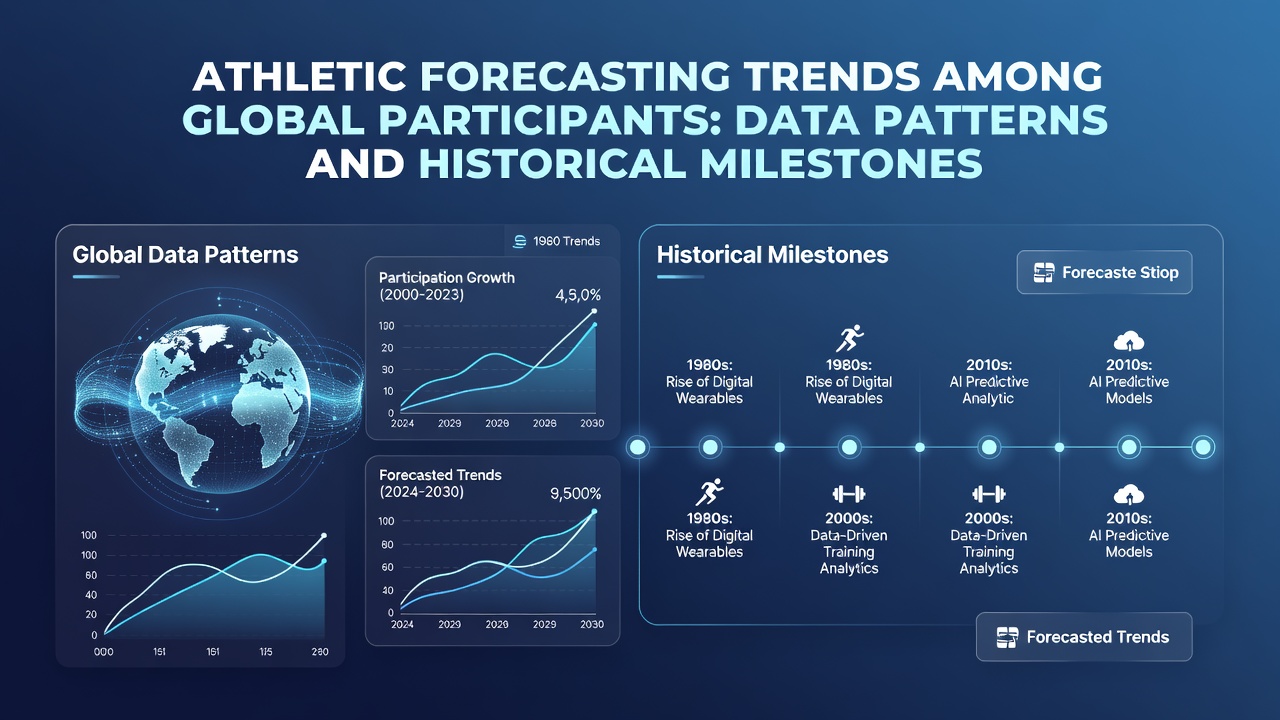
Researchers have tracked athletic forecasting trends among global participants for decades, noting steady shifts in how data informs predictions across major sports leagues and international events, and these patterns reveal both technological advances and evolving participant behaviors that stretch back to the 1950s when basic statistical models first gained traction in professional baseball and soccer analysis.
Early Historical Milestones in Athletic Forecasting
One milestone arrived in 1960 when early computer-assisted models helped forecast outcomes at the Rome Olympics, marking a departure from purely intuitive assessments, while subsequent decades saw American universities integrate regression analysis into college sports scouting by the late 1970s. Data from that era shows participation in forecasting communities grew alongside mainframe access, and observers note similar developments in European football clubs that began compiling player metrics in the 1980s. By 1995, internet forums allowed wider global input on match predictions, expanding reach beyond academic and professional circles into broader participant networks.
Data Patterns Emerging Across Regions
Global data patterns indicate that participants in North America favor machine learning applications for NFL and NBA forecasts, whereas those in Asia often incorporate real-time weather and travel variables into cricket and basketball models, and studies from the Australian Bureau of Statistics highlight rising use of wearable sensor data in rugby predictions since 2015. European participants meanwhile show consistent reliance on historical head-to-head records combined with current form indicators, creating layered approaches that differ markedly from South American trends where economic factors sometimes enter soccer outcome calculations. These regional variations appear in aggregated reports that track accuracy rates climbing from roughly 52 percent in 2000 to over 68 percent in recent years for top models.
Technological Shifts and Participant Engagement
Technological shifts accelerated after 2010 when cloud computing lowered barriers for individual forecasters, enabling participants worldwide to run complex simulations on personal devices, and this change coincided with increased mobile app adoption that connected users across time zones. Figures reveal participation spikes during major tournaments, such as the FIFA World Cup cycles, where engagement metrics double compared to off-years, while those who study these patterns point to September 2026 as a period when updated AI frameworks from several international research groups are scheduled for public release. Such releases often coincide with new data streams from athlete tracking systems, allowing forecasters to refine inputs on variables like fatigue and recovery times.
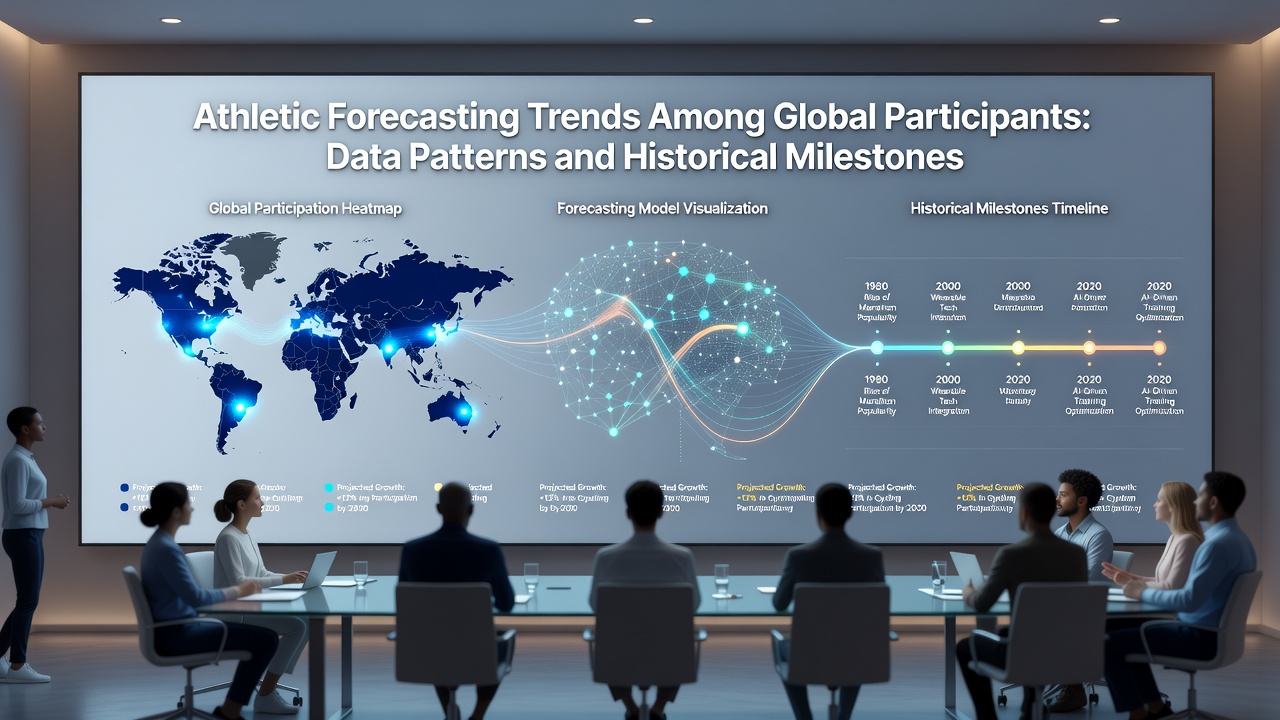
Additional patterns emerge when examining demographic data, which shows younger participants gravitating toward ensemble methods that blend multiple algorithms, and older cohorts tending to weight traditional scouting reports more heavily. Research indicates accuracy improves when models incorporate both quantitative metrics and qualitative elements such as team morale indicators, though implementation varies by sport and region. In Canada, for instance, hockey forecasters have integrated ice surface analytics since the early 2000s, producing datasets that feed into broader international comparisons available through academic repositories.
Current Trends Approaching 2026
As 2026 approaches, participants increasingly combine satellite imagery with performance databases for outdoor sports, creating forecasts that account for venue-specific conditions at a granular level, and this integration builds on earlier milestones like the 2008 introduction of GPS tracking in professional athletics. Data shows cross-border collaboration rising through open-source platforms where forecasters share code snippets and validation results, fostering incremental gains in predictive precision. September 2026 stands out because several university-led initiatives plan to publish longitudinal studies comparing forecast reliability across continents, offering fresh benchmarks for the global community.
Observers note that regulatory environments in different jurisdictions influence how openly participants discuss and refine their methods, with some regions encouraging transparent data sharing while others maintain stricter boundaries around proprietary models. These frameworks shape participation rates and the speed at which new techniques spread, yet core data patterns remain consistent: models that update frequently outperform static ones, and hybrid human-AI approaches continue to demonstrate measurable advantages in long-term accuracy tracking.
Conclusion
Overall, athletic forecasting among global participants reflects a progression from rudimentary statistics to sophisticated, multi-source systems, and historical milestones continue to inform today's data patterns even as new technologies emerge ahead of 2026. Those who examine these trends find clear evidence of growing interconnectivity across regions, supported by expanding datasets and shared analytical tools that sustain ongoing development in the field.